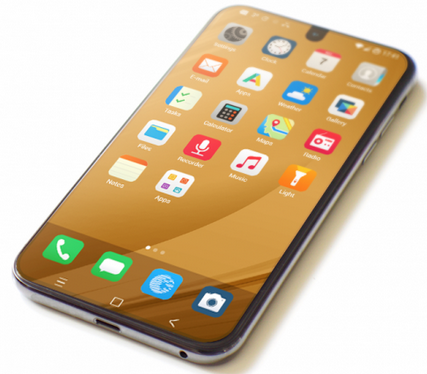
I’ve just come across the NexPhone, which is available for preorder with delivery expected in Q3. They’re positioning it around their own de-Googled “NexOS” and, from what they’ve shown, it has a fairly mature desktop mode.
What’s particularly interesting is that they aren’t stopping there, Debian Linux is installed alongside Android and appears to run well when docked to an external display. They’re even demonstrating Windows 11 running from the device on a separate partition. Whether all of that is practical day-to-day is another question, but technically it’s an ambitious convergence attempt.
I do have reservations. There isn’t much detail yet about the depth of their de-Googling, long-term software support, or environmental considerations (I’m using a Fairphone, so that matters to me). So I won’t be pre-ordering. Still, it’s worth watching.
What stands out to me is that a smaller manufacturer seems to be pushing “phone as computer” more decisively than Google themselves. To me, that suggests convergence may be addressing a latent need. People feel the friction of carrying both a phone and a computer, but don’t necessarily frame the solution in those terms until they see it working.
Even if Nex doesn’t get everything right, it does show that this space is technically possible, which makes the desktop mode discussion here feel even more relevant.
Linux is actually my main OS at home, although I wouldn’t describe myself as a power user. Realistically, most of what I do on a desktop is in a windowed environment and browser-based.
From that perspective, I sometimes struggle to see a fundamental reason why a capable Android desktop mode couldn’t cover the same ground for many users. If the window management, browser experience, and peripheral support are good enough, the line between “phone” and “light desktop” starts to blur quite a bit.
That’s partly why convergence interests me, not because it replaces every traditional desktop use case, but because it might be enough for a large chunk of everyday computing.